

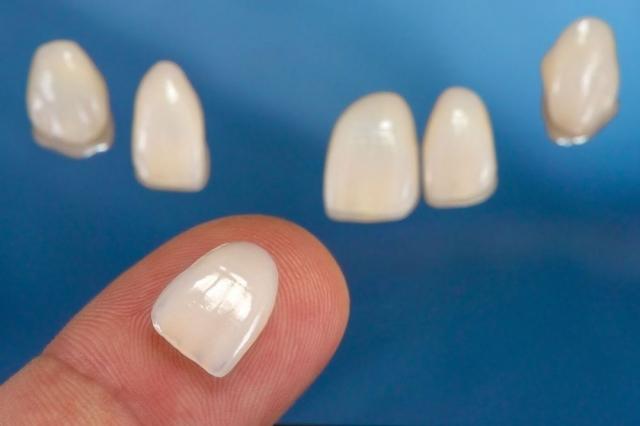
When you consider getting veneers, you have many options to think about before the procedure. For example, several materials are available, like porcelain veneers, zirconium veneers, or composite veneers.
Also, veneers can be permanent or temporary. The material also influences the aesthetics and durability of veneers. As a result, different types of veneer are better suited for particular situations and purposes.
So, how do you choose the right ones for you? Let's have a closer look at eight types of them.
1. E-Max veneers
E-max veneers are made of glass-ceramic lithium disilicate. They are among the greatest in today's market due to their natural looks, strength, and durability.
They can survive for more than ten years without any dental issues if properly cared for. Because of their transparency, they can mix with your natural teeth, giving your smile a natural appearance. They're also stain-resistant, making them easy to keep clean.
However, these veneers require a longer application process and are more prone to chipping and breaking.
2. Zirconium veneers
Zirconium veneers are an excellent choice for correcting significant decay, chipping, and fracture concerns. Made of zirconium dioxide, it is one of the most durable monolithic ceramics.
They have outstanding strength since no other materials have been added to the composition. Because they appear opaque, they can dramatically affect your teeth. They are ideal for tooth rebuilding in severe tooth decay cases and provide overall strength. Because of its opaque look, it can also be used to treat discoloration.
Speaking about opaque, it may give the appearance of teeth an unnatural aspect. They typically outlast most other veneer variations because of their exceptional strength and quality.
3. Porcelain veneers
Porcelain veneers are one of the most prevalent types of veneers, and they are easy to find at a dental clinic near you. They are made of feldspar, which is a naturally occurring glass ceramic. Feldspathic porcelain is a thin, translucent substance with a very natural appearance.
Another significant advantage of having porcelain veneers is that they are resistant to staining, chipping, and discoloration. This is one of the reasons they last longer than any other sort of veneer.
The only disadvantage of porcelain veneers is the lengthy tooth preparation process, which leads to a lengthy application procedure.
4. No prep veneers (Lumineers)
"Non-prep" veneers, also known as "no prep veneers" or "minimal-prep veneers," are single-visit veneer treatments that need little or no tooth preparation as a cosmetic surgery. They are tiny, compact shells that are carefully affixed to your teeth to restore the old tooth surfaces.
Lumineers are thought of as a quick cure for chipped, deformed, or discolored teeth. Lumineers, Durathin veneers, and Vivaneers are examples of no-prep veneers. They are ideal for persons who desire veneers but do not want invasive procedures and a somewhat less invasive veneering technique.
Because they are thin, these veneers are readily fractured or chipped. Because of their thin construction, they may not cover stains and other veneers. Gum problems are more likely to occur due to a poor fit.
5. Composite veneers
Composite veneers are used as an alternative type of veneer that is substantially less expensive and faster than porcelain veneers. Resin, a tooth-colored dental restorative substance, is the fundamental component of composite veneers. Because of their fragility, they have a higher success rate when employed on the front teeth rather than the back teeth.
Composite veneers have a shorter lifespan than porcelain veneers and are more prone to stains, scratches, and fractures.
Composite veneers are also referred to as same-day and temporary veneers since they may be bonded rapidly and require less enamel removal.
6. Same-day veneers
They are also known as ready-made veneers since they are created, prepared, and put on the same day.
These are created in a dentist's clinic utilizing an automatic milling machine using CAD/CAM technology instead of regular porcelain veneers.
The entire procedure of dental facets includes tooth preparation, a digital scan of the tooth, and the production of veneers. The veneers are made on the same day using automated equipment.
7. Temporary veneers
Temporary veneers can be used in two ways: while you wait for permanent veneers to arrive or as clip-on veneers.
Temporary veneers are generally formed of composite resin with a short lifespan. Because they are clip-on, they are easier to put on and take off.
Temporary veneers are better suited for folks wishing to see if they are right for them in the long run.
8. Clip-on veneers (Pop on veneers)
Clip-on veneers are removable and don't require any tooth alterations.
Custom clip-on porcelain and composite resin veneers are available, but prices vary. Clip-on veneers are simple to use but must be cleaned properly to stay in good condition. Last but not least, avoid eating hard or chewy foods while wearing your clip-on because they may cause damage.
Then there are non-custom clip-on veneers, which do not require any prior teeth preparation or visits to your dentist; you can buy them at a drugstore and put them on right away. Again, they are only suitable for short-term usage and are not customizable; thus, not producing actual results.